I originally posted this as one article and it proved a little rambly I think. So i have reformulated it into two ideas; two different formulations of paradox.
I would not be surprised if every field of study arrives at a somewhat gross paradox in one way or another, a paradox which seems to bring the entire field of study into question in one way or another. I would like to provide a couple of examples of significant human paradox, the first being a psychologically based dilemma, the second (which will appear in PARADOX DEVELOPMENT PT. II) a more physiological one, and one which has a particularly high profile character sitting right in the middle of the problem.
I just finished a book by Adam Phillips and Barbary Taylor called “On Kindness” which is a thorough exploration a possible ‘instinct’ for kindness and psychological groundwork for what is actually a pretty mystifying component of modern culture: being kind. To grossly paraphrase the project of this book, the author(s) ask, ‘Why are we kind to one another? Or: are we kind to one another.’
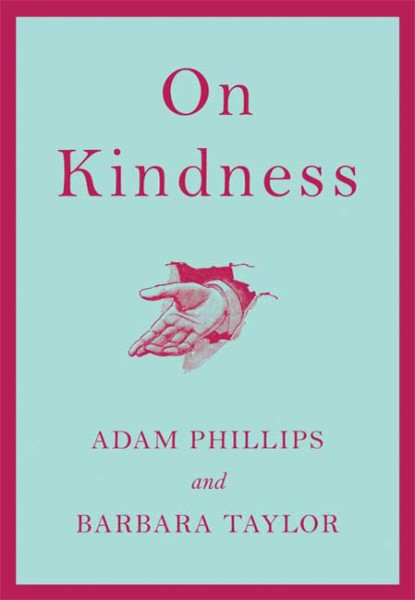 The authors do a very good job of presenting the idea that perhaps being kind is not as simple as it seems. This proposition then turns into an exploration of everything else connected to that impulse to be nice: our love for brethren, for a lover, for a parent, for humanity, and perhaps finally for oneself.
In good philosophical fashion, the authors arrive at some stiff paradoxes with regards to our instinct to be kind. These are a few of the components to the paradox: our original sense of love and attachment comes from a connection to the mother. We feel unbounded love from her, at first. But then there’s a sense for the mother that her child is not reciprocating this feeling, he just cries and makes messes and expresses no gratitude, and a sense of resentment is born in her for the child, according to the history of psychoanalysis. The child ages and begins to learn to ask nicely to get what he wants… and the scope of what he wants broadens as he ages. He begins to foster a resentment for the mother as a part of normal formation of individuality alongside sexual awareness. There is then a complex series of evolutions into independence between parent and child. At the end, even if all severance is made in a “healthy” way there is this paradox about the meaning of the act of kindness:
The kindness of childhood–upon which parenting depends–makes a problem of desire in adulthood. Affection is inevitably entwined with strong feelings for parents; it becomes a nice word for incest. Kindness and prohibition are inextricable; kindness is our recognition of the forbidden and our refusal of it… Because of the incest taboo our desire is experienced as a risk. Our kindness, in other words, is the key to our sexual problems, and not the other way around…. If there was to be a viable modern kindness, the psychoanalysts had begun to believe, it had to be allied to aggression, it had to possess a more forceful vitality; it couldn’t be a wishful refuge from the patent brutality of human nature. The kindness of Christian humility had begun to seem, from a psychoanalytic point of view, very suspect. Freud had said, before the First World War, that kindness split off from sexual desire breeds a fundamental frustration which in turn leads to a destructive hatred that, directed against the self, becomes impotence and frigidity.
(Excerpted from pp 86-88)
I don’t really even want to comment on the material quoted there… but to point out the glaring, wonderful paradox that a human comes to when he investigates something so intrinsic to our condition as loving and hating. This paradox encompasses the Oedipal Complex, as well as–in part–the nature of war, and the nature of disharmony between the sexes in relationship. And it is at the end of a string of paragraphs like that–written by an accomplished expert–that I ask, “Who are we!?”
My sense is that there is a natural quality to this fundamental paradox. In other words, perhaps part of being human, is to dwell within paradox. Paradox itself is easy to say and easy to point out. Zeno’s paradox, for example. Or the paradox of the river crossing with the fox, the chicken and the feed. But to be within a real paradox, and to be aware of it, is something else altogether and requires a skill somewhat alien to human practice, even though the actual paradox is not at all alien; on the contrary, it is intrinsic.
My father wrote a book recently with a PhD psychologist, called Quicksilver:
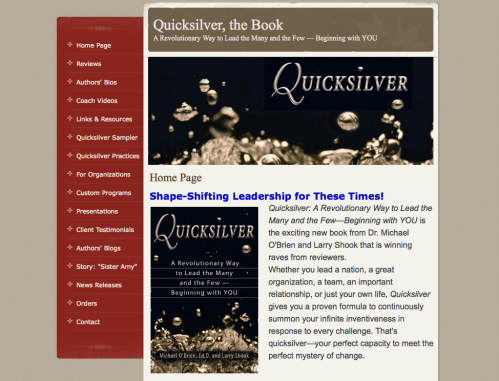 … in which they generate a nice formulation of the effect of a paradox upon the psyche, or the mind. The doctor with whom my father wrote the book calls this dwelling-with paradox a PDQ, a Paradox Development Question… and when a paradox is presented, or self-presented, the mind–as well as the subconscious–latch onto the problem of the paradox. The mind loves puzzles.
There are myriad examples of thinkers dwelling-with paradox throughout the ages; a famous example would be the challenge to Archimedes made by King Hiero II–who suspected that a goldsmith who’d recently made him a crown, did not make the crown entirely from gold and had kept some for himself. This is a paradox because the king wants to know if the crown is solid gold without opening it up and verifying, melting it down to discover it were some kind of alloy. This gives rise to the famous tale that Archimedes made his revelation in the bathtub, when he realized that the specific gravity of that volume of pure gold would displace a different amount of water to that of an alloy…. and ran through the streets, shouting Eureka!… which in Greek means, “I found it!”… which conclusion led to this article by Malcolm Gladwell, which details another interesting psychological phenomenon in the presence of paradox, which is the necessity for relaxation after concerted effort to solve a problem; in other words, that it is only when the mind relaxes after a diligent effort to solve a puzzle that the subconscious is able to enter its 2 cents.
One of the best cognitive exercises we can engage in is paradox formulation. But it also turns out that we are involved not only in cognitive paradox, but physiological paradox, with respect to our own health and wellness. Please continue on to PARADOX DEVELOPMENT PT. II.